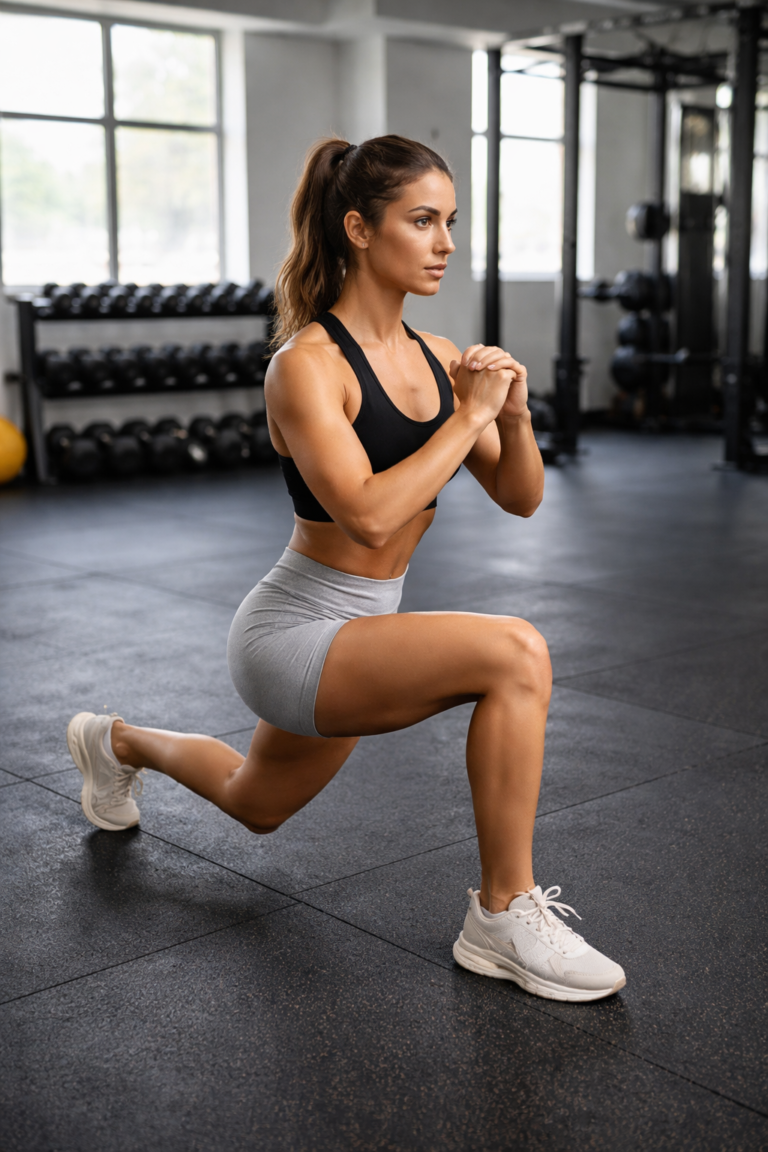
The reverse lunge for athletes stands as one of the most effective single-leg exercises for building explosive power, enhancing speed, and preventing injuries. Unlike traditional forward lunges, the reverse movement pattern offers superior control and reduced knee stress, making it ideal for athletes seeking peak performance.
This comprehensive guide will transform your understanding of the reverse lunge for athletes through 9 powerful performance tips. Whether you’re a weekend warrior or competitive athlete, mastering these techniques will elevate your training to new heights.
Why Athletes Choose Reverse Lunges
Athletes gravitate toward reverse lunges because they directly translate to sport-specific movements. The backward stepping motion mimics deceleration patterns found in basketball, soccer, tennis, and countless other sports.
The reverse lunge for athletes also provides exceptional unilateral strength development. This addresses the common strength imbalances that plague many athletes, particularly those involved in rotational or asymmetrical sports.
Research from the American College of Sports Medicine consistently shows that single-leg exercises like reverse lunges improve functional strength more effectively than bilateral movements alone.
9 Powerful Performance Tips for Athletic Excellence
1. Maximize Posterior Chain Activation for Sprint Performance
The key to an effective reverse lunge for athletes lies in posterior chain engagement. Focus on driving through your heel while maintaining a slight forward lean. This positioning activates your glutes and hamstrings more effectively than staying completely upright.
Imagine pushing the floor away with your front foot rather than simply standing up. This mental cue ensures maximum recruitment of the muscles responsible for explosive sprint starts and acceleration phases.
2. Create Sport-Specific Stride Lengths and Movement Patterns
Adjust your step length based on your primary sport demands. Basketball players benefit from longer strides that mimic defensive slides, while soccer players should practice shorter, quicker steps that replicate rapid direction changes.
The reverse lunge for athletes becomes sport-specific when you match the stride length to your competition requirements. Track athletes might use exaggerated ranges of motion, while field sport athletes focus on moderate, controlled movements.
3. Incorporate Tempo Variations for Explosive Power Development
Vary your tempo to develop different athletic qualities. Use a slow 3-second descent followed by an explosive drive up for strength-power development. Alternatively, perform rapid-fire reverse lunges to enhance muscular endurance and metabolic conditioning.
The eccentric (lowering) phase deserves special attention in the reverse lunge for athletes. This controlled descent builds tremendous strength in the lengthened position, directly transferring to improved landing mechanics and injury prevention.
4. Loading Strategies with Barbells for Maximal Strength Gains
Graduate to barbell loading once you’ve mastered bodyweight reverse lunges. Start with a back-loaded barbell position, maintaining strict spinal alignment throughout the movement. The added resistance transforms the reverse lunge for athletes into a serious strength-building exercise.
Consider front-loaded variations using a barbell in the front squat position. This challenges your core stability while maintaining the beneficial movement pattern of the reverse lunge.
5. Use Offset Weights to Challenge Rotational Stability
Hold a dumbbell or kettlebell in one hand to create an offset load. This variation of the reverse lunge for athletes demands exceptional core control and mimics the unbalanced loads encountered in many sports.
The offset loading particularly benefits athletes who carry equipment (hockey sticks, tennis rackets) or those who frequently operate in asymmetrical positions during competition.
6. Program Reverse Lunges Within Periodized Training Cycles
Integrate the reverse lunge for athletes strategically throughout your training year. During off-season phases, emphasize heavy loading and strength development. Pre-season training should focus on explosive variations and sport-specific patterns.
In-season maintenance requires lighter loads with emphasis on movement quality and injury prevention. The versatility of reverse lunges allows for seamless adaptation across all training phases.
7. Integrate Plyometric Progressions for Reactive Strength
Transform your reverse lunge for athletes into a plyometric exercise by adding explosive elements. Start with simple jump-back reverse lunges, progressing to alternating jumping reverse lunges as your reactive strength improves.
The stretch-shortening cycle engaged during plyometric reverse lunges directly enhances your ability to generate power during rapid direction changes and explosive movements.
8. Address Bilateral Strength Deficits Common in Athletes
Use the reverse lunge for athletes as an assessment tool to identify strength imbalances. Perform equal repetitions on both legs, noting any differences in stability, range of motion, or strength output.
Address weaker sides by performing additional volume or starting workouts with the non-dominant leg. This systematic approach ensures balanced development and reduces injury risk.
9. Implement Recovery Protocols Between High-Volume Lunge Sessions
The demanding nature of the reverse lunge for athletes requires intelligent recovery strategies. Focus on hip flexor stretching, glute activation, and quad foam rolling between sessions.
Active recovery sessions featuring light reverse lunges with extended range of motion can actually enhance recovery while maintaining movement quality. The National Strength and Conditioning Association emphasizes the importance of movement-based recovery for athletes.
Tools and Supplies Needed
The beauty of the reverse lunge for athletes lies in its minimal equipment requirements. Start with just your bodyweight to master the movement pattern before adding external resistance.
Essential equipment includes:
- Dumbbells or kettlebells for progressive loading
- Barbell and rack for advanced strength development
- Exercise mat for floor-based variations and stretching
- Resistance bands for activation warm-ups
- Foam roller for recovery and mobility work
Optional equipment like weight vests, suspension trainers, and plyometric boxes can add variety to your reverse lunge for athletes programming.
Common Mistakes to Avoid
Many athletes sabotage their reverse lunge for athletes by making these critical errors. Avoid these pitfalls to maximize your training effectiveness and minimize injury risk.
Knee Cave (Valgus Collapse): The front knee drifting inward indicates weak hip stabilizers. Focus on pushing your knee outward throughout the entire movement range.
Excessive Forward Lean: While some forward lean is beneficial, excessive trunk flexion shifts load away from the target muscles. Maintain a proud chest position throughout the movement.
Inadequate Depth: Shallow reverse lunges limit strength gains and flexibility improvements. Aim for your back knee to hover just above the ground at the bottom position.
Rushing the Movement: Speed without control defeats the purpose of the reverse lunge for athletes. Prioritize movement quality over repetition count, especially during the learning phase.
Expert Tips for Athletic Success
Maximize your reverse lunge for athletes with these professional insights. These advanced tips separate good athletes from great ones.
Breath Control: Inhale during the descent and exhale forcefully during the drive phase. Proper breathing enhances core stability and power output.
Visual Focus: Keep your eyes focused on a fixed point ahead rather than looking down. This maintains better balance and simulates competition conditions where head position matters.
Progressive Loading: Increase difficulty gradually by extending range of motion, adding weight, or incorporating instability before jumping to advanced variations.
Movement Integration: Combine reverse lunges with upper body movements like presses or rows to create compound exercises that better replicate sport demands.
Programming Your Reverse Lunge Training
Effective programming of the reverse lunge for athletes depends on your training goals and competitive calendar. Beginners should start with 2-3 sets of 8-12 repetitions per leg, focusing primarily on movement quality.
Advanced athletes can progress to 3-4 sets of 6-15 repetitions depending on the training phase. Strength-focused phases emphasize lower repetitions with heavier loads, while endurance phases utilize higher repetitions with moderate resistance.
Frequency recommendations for the reverse lunge for athletes range from 2-4 times per week, depending on training volume and intensity. Allow adequate recovery between high-intensity sessions while maintaining movement practice with lighter loads.
Measuring Your Progress
Track your reverse lunge for athletes progression through multiple metrics. Monitor increases in load, repetitions, and range of motion over time. Video analysis can reveal improvements in movement quality that aren’t immediately apparent.
Performance testing through single-leg strength assessments, jump tests, and sport-specific measures will demonstrate the transfer of your reverse lunge training to athletic performance.
The reverse lunge for athletes serves as both a training exercise and assessment tool, providing valuable insights into your physical development and areas needing attention.
Conclusion
Mastering the reverse lunge for athletes through these 9 powerful performance tips will revolutionize your training approach. This versatile exercise addresses strength, power, mobility, and stability in one efficient movement pattern.
Remember that consistency trumps intensity when developing proficiency with the reverse lunge for athletes. Start conservatively, focus on perfect form, and progressively challenge yourself as your abilities improve.
The investment you make in mastering the reverse lunge for athletes will pay dividends across all aspects of your athletic performance. From improved acceleration to enhanced injury resilience, this fundamental movement pattern deserves a permanent place in your training arsenal.